Investor notes, to read alongside our deck
Weeks of structural design,
done in minutes.
The deck tells the story. This page holds the details: one real design step by step, how we test every version, exact run times, the market math you can check yourself, how we compare and what the round pays for.
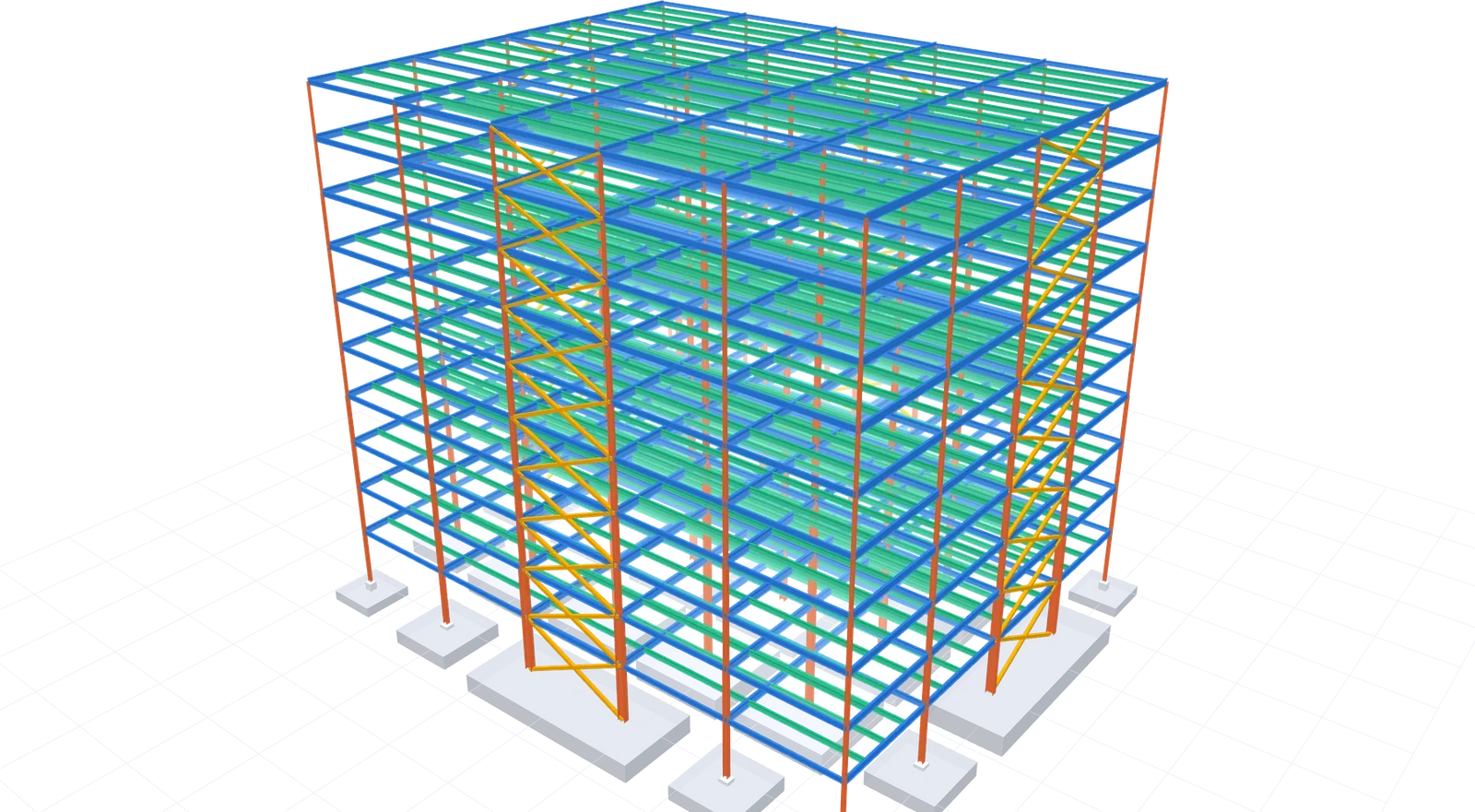
to design a 10-story New York office, with every recorded check passing
standard test buildings pass every check in the current version
for one commercial building by hand, in timelines engineering firms publish
- One design, step by stepInputs, checks, choices and outputs
- How we test it600 buildings at every version
- Exact run timesSix saved designs, against weeks by hand
- Check our market mathChange the assumptions yourself
- How we compareDream, Genia, Spacial and ETABS
- What the round pays forMilestones, spending and other options
One real design, step by step
The New York office from the deck, in the four steps Atomstride runs on its own. The whole run took 55.6 seconds.
You give it the building
A grid, an uploaded plan or a free-form shape, plus the location, loads and limits. Here, a 10-story office in New York, designed to US codes.
- 10stories, about 180,000 square feet
- NYCsite, with loads to ASCE 7-22
- 3ways to start: a grid, a plan or a free-form shape
It designs and checks every part
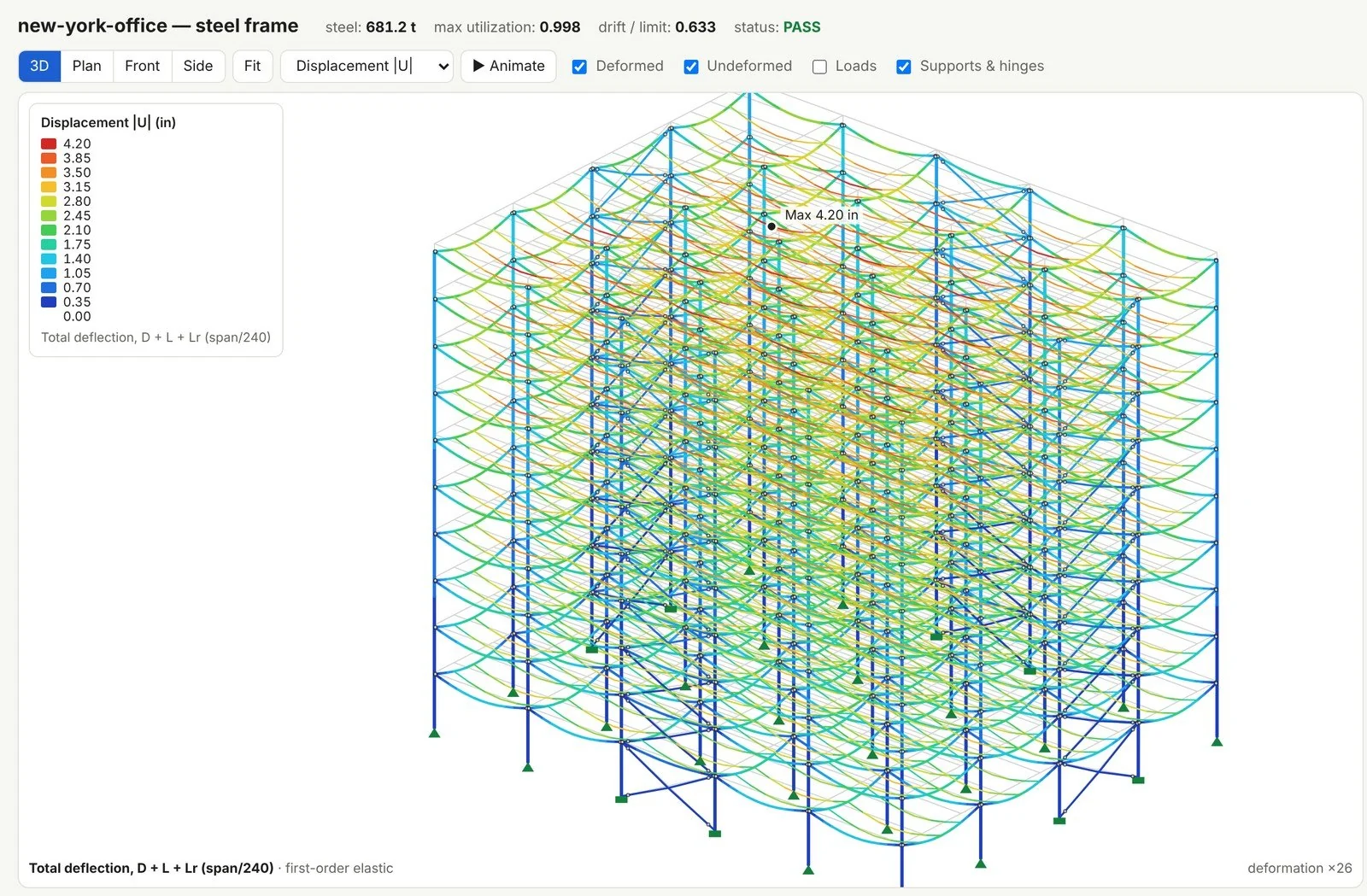
A structural solver computes the forces. A code engine checks strength, stability and serviceability for every member, connection and footing, then the loop runs again until everything passes.
- 1,270steel members sized and checked
- ~20full structural analyses in a median design
- ~265,000member sizes screened in a median design
It compares systems and trims steel
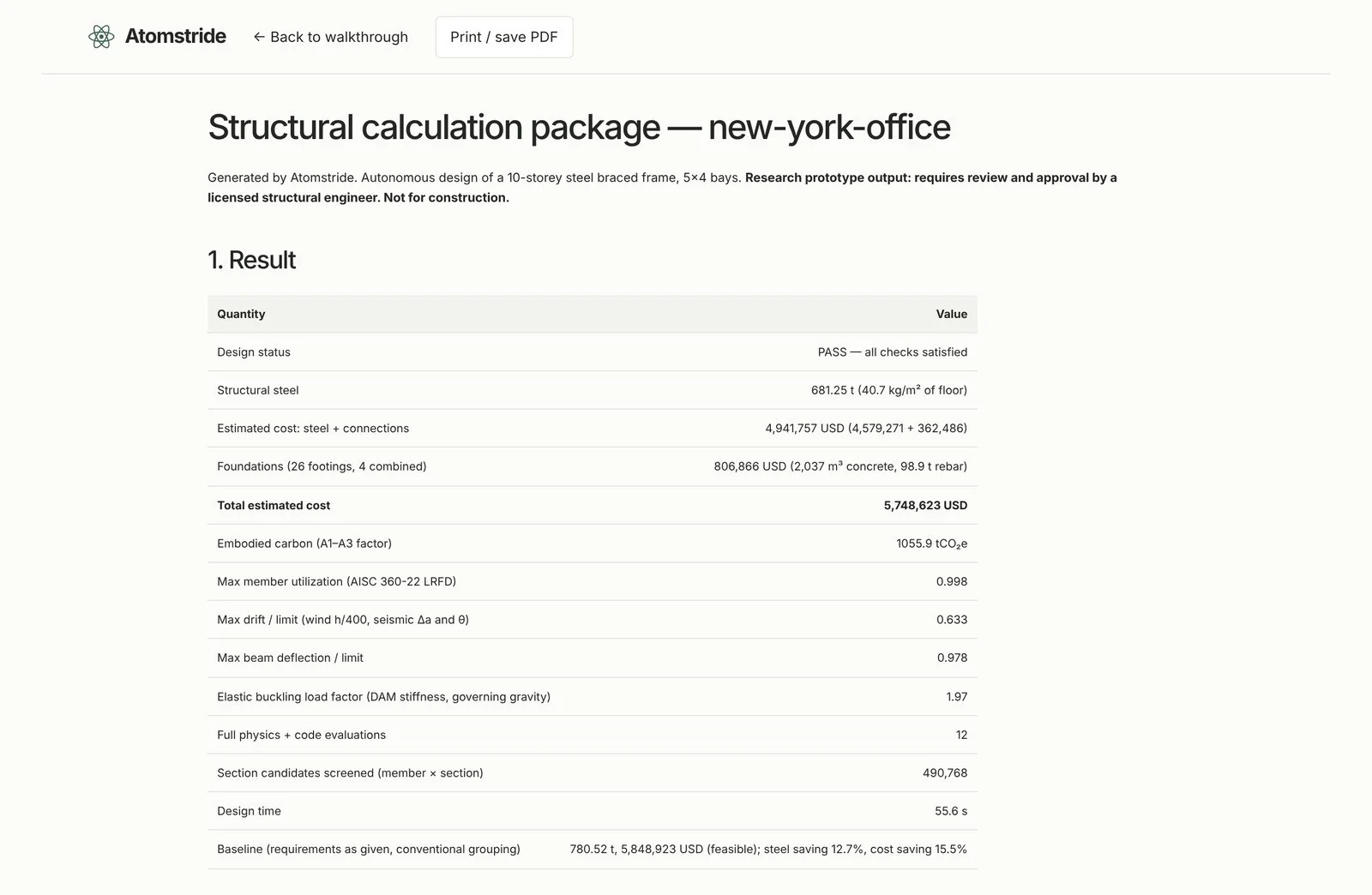
It fully designs five structural systems, keeps the one with the lowest total cost, here a braced frame, and removes material wherever the checks allow.
- 5structural systems fully designed
- 12.7%less steel than a conventional start
- 1system kept: the braced frame
Structural steel for the New York office
12.7% less steel, against the recorded baseline for the same brief. One project, not a portfolio-wide claim.
You get what an engineer signs
A calculation package that shows every member and every check, clause by clause, plus the 3D load analysis, drawing sheets and quantities. A licensed engineer reviews and signs, as with any engineering software.
- 980beam connections, plus 30 base plates
- 26footings, to ACI 318-19
- 55.6 sfor the whole design
How we test every version
Every new version of Atomstride designs the same 600 standard steel buildings. A building only counts as passing when every recorded check passes.
median time for one complete design, recorded on our own hardware
comparisons of forces and displacements with an independent solver (PyNite 3.2.0), with zero failures
Licensed engineers at Western Engineering, a construction firm in Bangladesh with about 4,500 people, reviewed our designs and calculation packages.
The 600 buildings
Steel buildings of 2 to 10 stories, with spans of 20 to 30 ft, braced and moment frames, from no earthquake loading to high.
What every check covers
Member strength and stability, deflection, drift and vibration, connections, anchorage and foundations.
What a design takes
In a median design, about 20 full structural analyses and about 265,000 member sizes screened.
Show the numbers
| Atomstride version | Buildings passing | Share |
|---|---|---|
| v0.18 | 426 of 600 | 71.0% |
| v0.19 | 441 of 600 | 73.5% |
| v0.20 | 526 of 600 | 87.7% |
| v0.21 | 531 of 600 | 88.5% |
| v0.22 | 560 of 600 | 93.3% |
| v0.23 | 597 of 600 | 99.5% |
| v0.24 | 600 of 600 | 100% |
| v0.25.1 (current) | 600 of 600 | 100% |
What isn’t proven yet
- No US licensed engineer has reviewed one of our designs yet, and we haven’t run a side-by-side with ETABS. Both are among the first things this round pays for.
- The 600 buildings are the same set at every version: a development benchmark, not a held-out test.
- The code checks are our own implementation. The independent solver comparison covers the analysis: forces and displacements.
- Members are sized as welded plate I-sections today. The standard rolled shapes US fabricators stock are next.
- Free-form designs are checked for member strength and serviceability. Connections and foundations are designed for standard steel buildings today.
- Concrete, and structures described in plain words, are in development. There are no paying customers yet.
Seconds and minutes, not weeks
Run time grows with size and complexity. On a scale where each step is ten times longer, our six saved designs sit far from the weeks a commercial building takes by hand.
Swipe sideways to see the whole scale.
Timelines published by engineering firms: Apex Grid Engineering, 4–10 weeks; Valdez Engineering, 12–24 weeks. Atomstride times are recorded single runs on our own hardware.
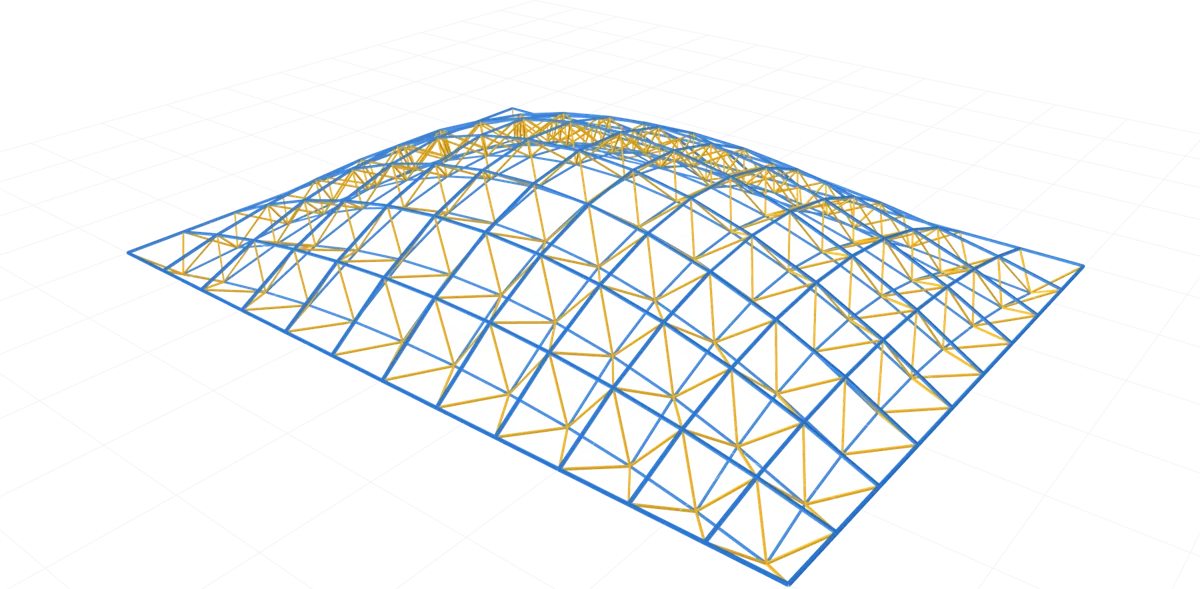
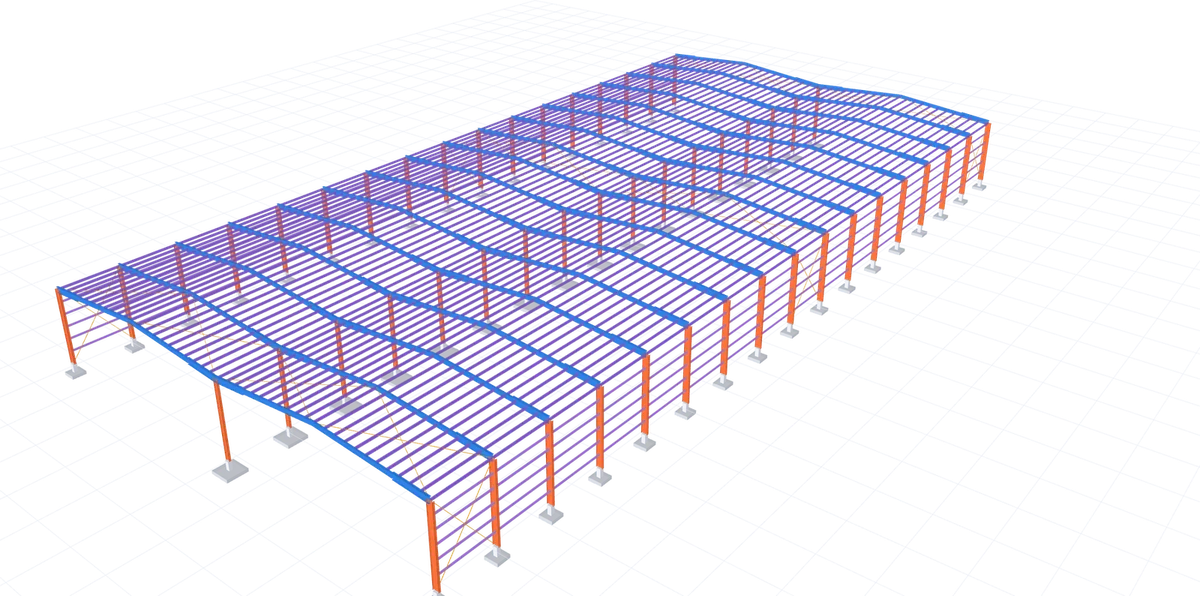
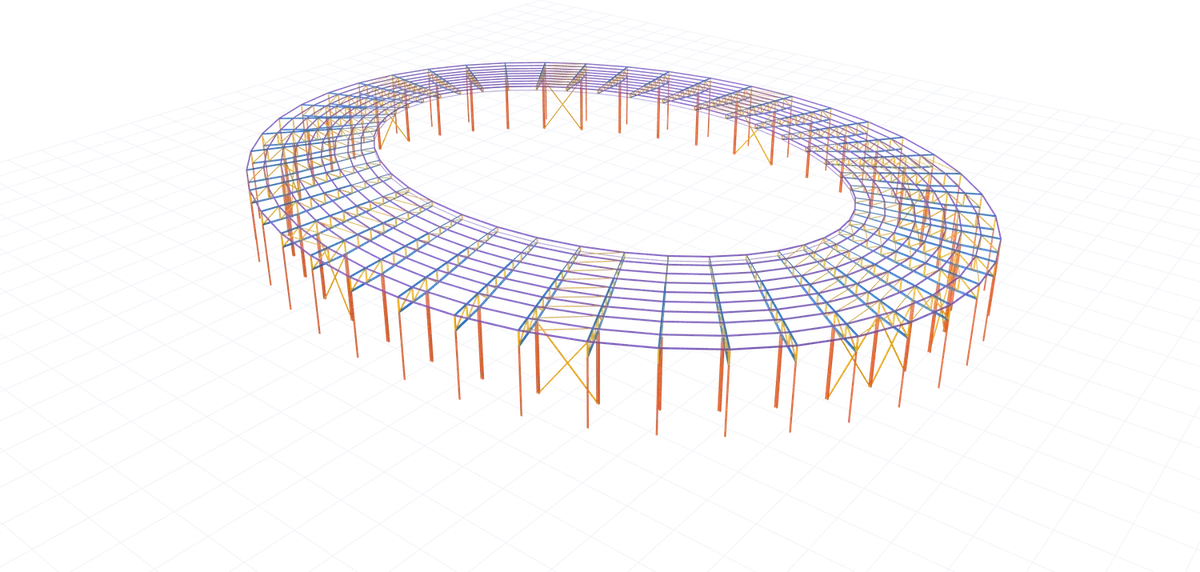
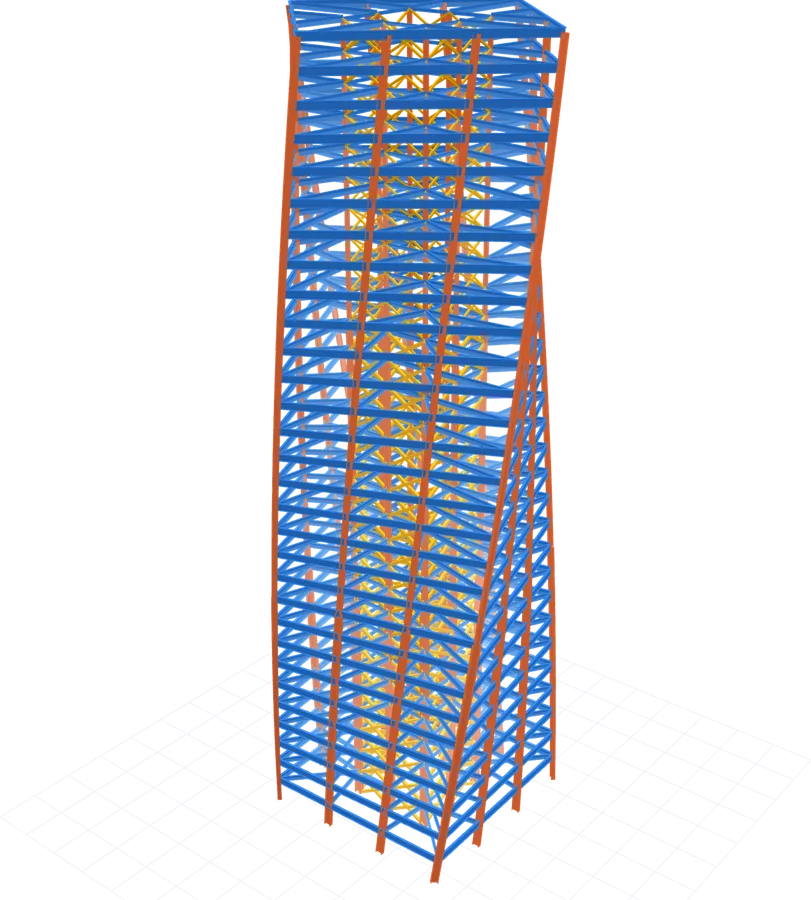
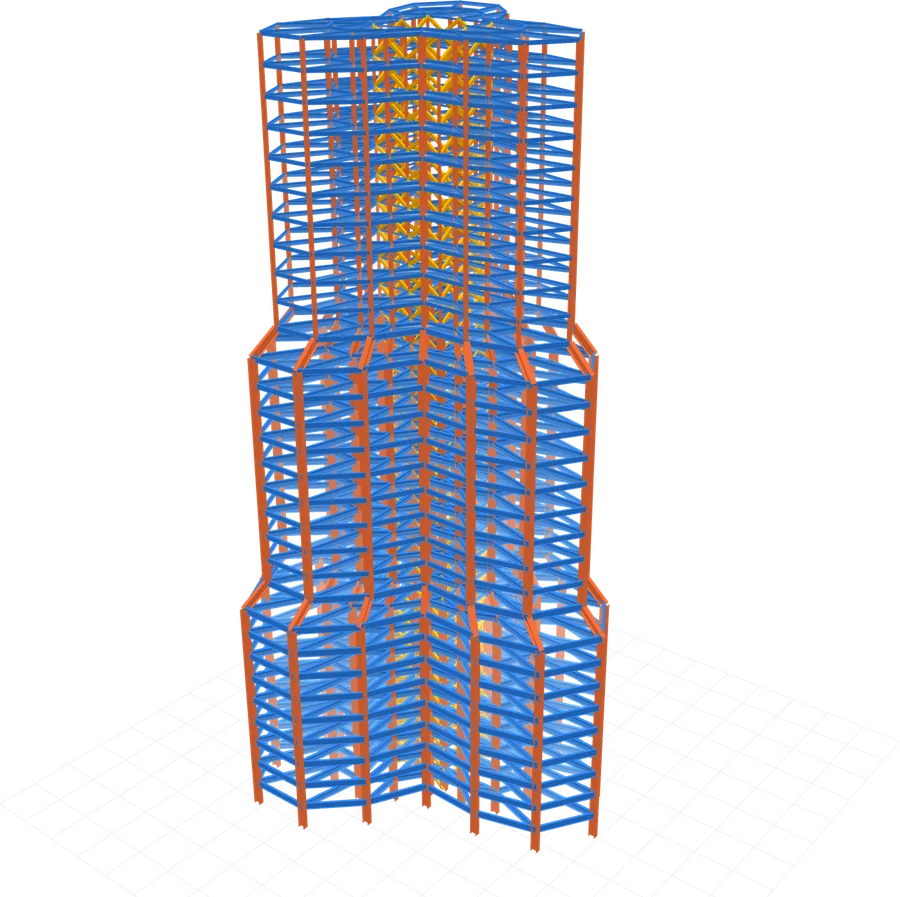
Free-form designs are checked for member strength and serviceability; the complete scope of checks applies to standard steel buildings.
Check our market math
What the world spends on structural design: construction spending times the share of it that goes to structural design. Pick a market and move the share across the range a fee survey reports.
Fee survey range: Monograph, 0.68–1.68%. Fee levels vary by country, so treat the worldwide figure as a range.
Source: . Across the full range: worldwide $18–44B a year, in the US $5–13B.
Structural engineering firms
Take on more projects with the engineers they already have.
Design-build contractors and steel fabricators
Get a checked structure and quantities before pricing a job.
Developers of repeatable buildings
Warehouses and other buildings where the same kind of design is done again and again.
Full automation, sold as software.
Others do the design work themselves, or help an engineer do it. Atomstride does the whole design, as software.
Software your firm runs
- ETABS, SAP2000, RAM, TeklaAnalysis software. The engineer designs.
- GeniaSuggests layouts for an engineer to finish
- AtomstrideDesigns the whole structure. Your engineer reviews and signs.
A service that does the work
- SpacialAn engineering service for homes
- DreamDesigns its own projects and signs as the architect
We sell to engineering firms
Dream and Spacial deliver the designs themselves, so they compete with the firms we sell to.
Software scales, services hire
A service needs more engineers for more projects and carries the design liability. Our software doesn’t.
Built for commercial buildings
Offices, warehouses and 30-story towers. A 10-story New York office took 55.6 seconds.
Investors are backing the category: Dream, $17M seed led by a16z (Oct 2026). Spacial, $10M seed (Oct 2025). Genia, $3M (Feb 2025).
Side by side
| Who | What it is | What you get | Who signs | Sold as |
|---|---|---|---|---|
| ETABS, SAP2000, RAM, Tekla | Analysis software | Forces and code checks. The engineer makes every design decision. | Your engineer | Software |
| Genia | A structural copilot | 3 to 5 suggested layouts from architectural drawings, to pick and edit | Your engineer | Software |
| Spacial | An engineering service for homes | Structural and MEP plans for houses and low-rise apartments | Spacial’s own engineers | A service |
| Dream | An AI architecture firm | A finished building design, with Dream as the architect of record | Dream | A service |
| Atomstride | Software that does the design | The whole structure, checked against the code, with its calculation package | Your engineer | Software |
From each company’s own materials and press coverage, November 2026. Sources are listed at the bottom of this page.
Can’t an AI agent just drive ETABS?
It can drive part of the job. 2026 research shows AI agents building ETABS, SAP2000 and OpenSees models from a text description. Building and analyzing a model is one step. A design also means choosing the structural system, sizing every member, checking every code requirement, fixing what fails, designing connections and foundations and writing the calculation package, then doing it all again when the plans change. Atomstride runs that whole loop, and we measure it on 600 buildings.
What the round pays for
We’re raising $1.5M on a SAFE. In our plan it lasts about 27 months with no revenue, enough to reach the milestones for a seed round. We’ll agree terms with our first investors.
on a SAFE
months in our plan, with no revenue
paid pilots
Where the money goes
Engineering is in Dhaka, where a senior engineer costs about a fifth of a US licensed engineer, so more than half of the money goes to engineer sign-off, pilots and selling.
Milestones
- Month 3First US licensed engineer reviews of past projects; ETABS side-by-side started
- Month 6Standard rolled steel shapes in the product; two to three pilots running
- Month 9US licensed engineer full-time (from month 8); a founder based near US customers
- Month 12Three to five paid pilots; first annual contract in negotiation
- Month 18–24Sales lead hired (month 13); US engineers signing off designs on real projects; concrete in beta; seed round
By the seed round, we aim to show
Other ways we could raise
Each structure is costed with its own hiring plan. Months assume no revenue.
| Structure | Raise | What it pays for | Money lasts |
|---|---|---|---|
| Our plan | $1.5M | Four engineers, a US licensed engineer, a founder near US customers and a sales lead | About 27 months |
| Small and fast | $500K | Two engineers and part-time US engineer review | About 21 months |
| Lean pre-seed | $1M | Three engineers and a US licensed engineer from month 10 | About 26 months |
| Standard pre-seed | $2M | Six engineers, a US engineer and a founder in the US early, and a sales lead | About 28 months |
| Larger round | $3.5M | Eight engineers, two US engineers and two sales hires | About 33 months |
| Accelerator | $220K–$500K | A program such as Techstars or Y Combinator, then a Demo Day raise | About 17 months |
The team
Abrar Faiaz
Co-founder and CEO
Built the Atomstride engine.
Studied civil engineering at BUET and publishes AI research, including a first-author paper on physics-guided AI in Elsevier’s Expert Systems with Applications. Leads an AI cyclone-warning team at Start Network. Silver medal, International Data Science Olympiad 2025.
Shadman Sharar Haque
Co-founder and COO
Leads product design, partnerships and fundraising. As CEO, grew Tyger Media past $1M a year in revenue and raised more than $500K. Created the news brand Nutshell Today. Studied finance at Bangladesh University of Professionals.
Nahin Bin Kaysar
Engineering lead
Studied civil engineering at BUET and ships production software: he built and launched Priyo Agency, a US bank account and payments service, and a production machine-learning backend. Built an AI assistant over Bangladesh’s 4,600-page building code.
Questions investors ask
Who is responsible if a design is wrong?
The licensed engineer who reviews and signs it, exactly as with ETABS or RAM today. Atomstride gives them a complete calculation trail, which makes the review faster.
How do you know the results are right?
All 600 test buildings pass every recorded check, and the engine’s analysis matched an independent solver in 5,835 comparisons. Licensed engineers at Western Engineering, a construction firm in Bangladesh with about 4,500 people, reviewed our designs and calculation packages. The code checks are our own, which is why a US licensed engineer’s review and a side-by-side with ETABS come next.
Why won’t Autodesk, Bentley, Trimble or CSI build this?
They sell software seats that help engineers iterate. Automating the whole loop is a different engine, so they’re more likely partners or buyers.
Why is the engineering team in Bangladesh?
Abrar and Nahin studied civil engineering at BUET, Bangladesh’s top engineering university, and great engineers there cost a fraction of US salaries, so the round goes further. Selling starts in the US, where a founder will be based, and grows into other markets.
What will you charge?
We don’t charge yet. Pilots will test per-project fees against annual licenses, priced against the engineering time and steel they save.
See it design a building live.
Pick a building, and we’ll design its structure with you on a call.